
The 2AM Crash · Waking up in the night
Wide awake at 2am again? Let's find out why.
You fall asleep fine. Then you're up between 2 and 4, heart pounding, mind racing, doing the math on the hours you have left. This may not be only a sleep problem. Blood sugar, stress hormones, night sweats and hormone shifts can all play a part, so I look at the whole picture.
- ✓ Why your body wakes you up in the middle of the night
- ✓ How blood sugar and stress can play a part
- ✓ Real options that go past “try sleep hygiene”
Self-pay · Private · 100% virtual

Do you experience any of these?
Check every statement that's true for you. Your level updates as you check boxes.
0 of 12 checked Not started
2AM Crash check-in
Check every statement that applies to see how closely you match this pattern.
Your symptoms may point to the menopause transition
Finish this check-in to unlock a 1-on-1 Strategy Call with Dr. Stacey.
This check-in is for learning. It isn't a diagnosis. Only a visit with a doctor can tell you what's really going on.
You're recommended for a 1-on-1 Strategy Call.
Waking in the night can come from blood sugar dips, stress hormones, night sweats or hormone shifts. It can also come from sleep apnea, your bladder or some medicines. That's why I look at your whole picture before we choose a plan.

Your whole story
Thirty private minutes on video. You talk, I listen.

Labs that fit you
Testing picked for what's going on with you, not a one-size panel.

Your next steps, made clear
If we're a fit, I'll walk you through what care with me looks like. No pressure, no guessing.
Why you keep waking up at 2am.
You've been told to try sleep hygiene. Here's what that advice leaves out.

Your body's night shift
An alarm you didn't set.
Research suggests that when blood sugar drops overnight, your body can release stress hormones like cortisol and adrenaline to bring it back up. That can jolt you awake, wide-eyed and wired.
Told to try sleep hygiene
A dark room and no screens can help. They don't fix what's waking you up.
It's not only a sleep problem
Blood sugar, stress, night sweats and hormone shifts can all wake you up.
The crash follows you all day
Short nights can mean a foggy morning and sugar cravings by the afternoon.
Sleep pills don't find the cause
They may help some nights. They don't tell you why you keep waking up.
You deserve more than “just try sleep hygiene.”
Rushed visits
Fifteen minutes isn't enough time to hear your whole story.
Guessing instead of checking
A plan made without the right labs is a guess.
Only one answer
You may get handed a sleep pill and sent home. You deserve to hear all of your options.
No one follows up
A prescription and a “see you next year.” Your body changes faster than that.

Sleep, blood sugar, stress and hormones are connected.
So we don't treat them one at a time. We work on them in the order your body needs. The Nervous System Eats First.™
Phase one
Reset
Calm your nervous system first. A body on high alert has a hard time staying asleep.
Phase two
Replenish
Support what your labs show is off, like blood sugar swings, iron or vitamins.
Phase three
Restore
Rebuild your sleep and support your hormones, with or without hormone therapy.
We look past one number.
Your tests are picked for your story. These are the areas I often look at when the nights are the hardest part.
Blood sugar
Blood sugar that rises and falls can be part of what wakes you up at night.
Hormones
Estrogen and progesterone both affect sleep, and they swing in midlife. I read them with your story, never alone.
Thyroid
A thyroid that runs too fast can make it hard to sleep and leave your heart racing.
Iron and nutrients
Low iron is linked with restless legs, which can keep you up at night.
Heart health
Research links poor sleep with heart health, so we check your heart too.
Sleep and safety check
Sleep apnea gets more common after menopause. If it may be part of the picture, I'll tell you.
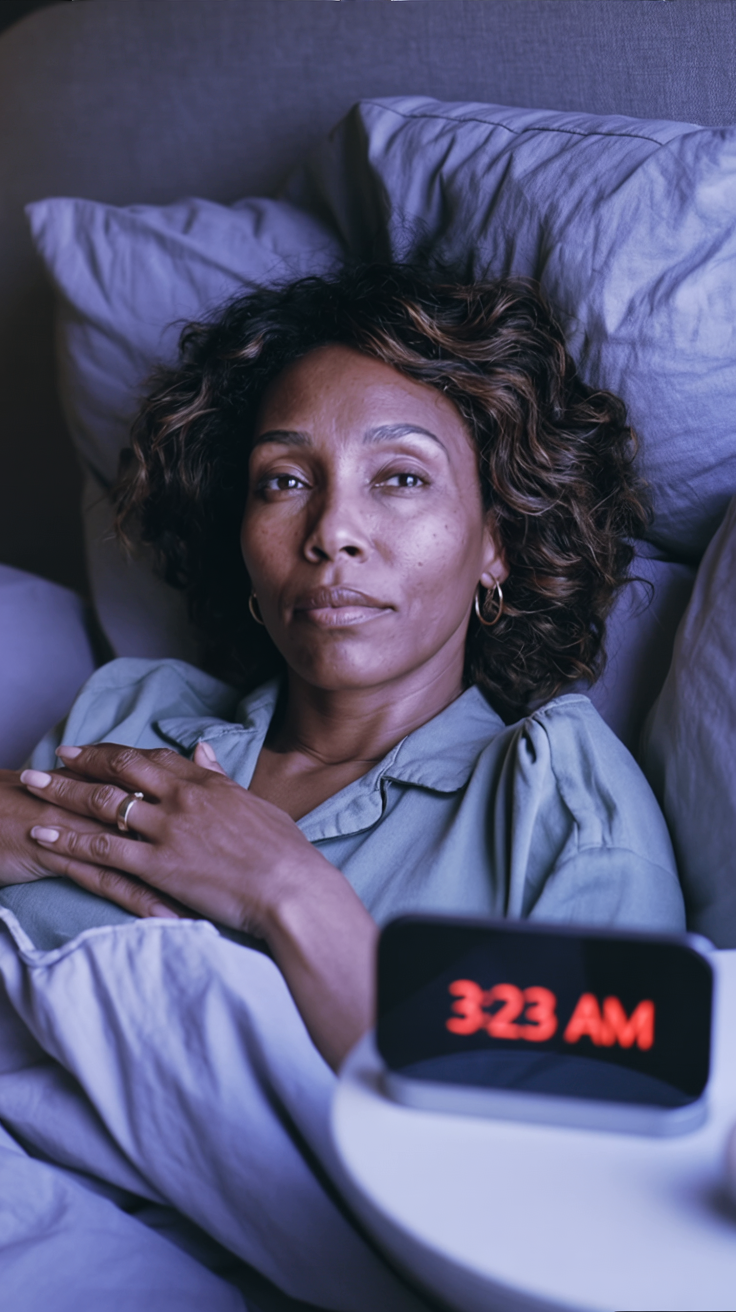
The 2am wake-up is real. The cause isn't always only hormones.
That's why I check before I treat. When we know what's driving it, we can choose care that fits you.
Your exact tests depend on your history and what we talk about on your call.
Four ways we can help you sleep through.
You don't have to pick one alone. We put together the mix that fits your health and your life.
Night-time tools
Small changes that help your nights.
- The same wake-up time every day
- A small protein snack before bed, if it fits you
- Go easy on evening alcohol and sweets
- A cool, dark, quiet room
These help. They don't treat the cause.
Calm your nervous system
Skills with strong research behind them for sleep.
- Sleep skills training (called CBT-I)
- Wind-down routines that fit how you're wired
- Stress support during the day
- Sensory calm at night
Steady your blood sugar
Food and timing built from your labs.
- Balanced dinners
- Protein and fiber at each meal
- Fewer late-night sweets
- Movement during the day
Hormone and medical options
If night sweats or hormone shifts are part of it, there are real options.
- Hormone therapy, if it fits you
- Non-hormone prescriptions
- A sleep study, if you need one
- Your choice, always

Not a portal. Not a PA. Me.
I'm a board-certified surgeon focused on midlife women's health, specializing in the menopause transition. I'm also late-diagnosed autistic, so I built this practice for women who are wired a little differently and have been told for years it's just stress.
In perimenopause, I was waking up at 2am on the dot, wide-eyed. So I know this one from the inside. “Try sleep hygiene” isn't a plan, and you don't have to settle for it either.
- ✓ Board Certified, American Board of Surgery
- ✓ Member, The Menopause Society & ACLM
- ✓ LegitScript Certified · Meta Health Verified
This is a composite story. It blends the experiences of several women, and details are changed to protect privacy.
She'd fall asleep by ten, no problem. Then 2:47am, almost every night. Heart pounding, mind running through tomorrow's to-do list.
She'd doze off right before the alarm, drag through the morning, and reach for something sweet by three. Her doctor told her to put her phone away at night.
On our call, she told me the whole story. We looked at her blood sugar, her hormones, her thyroid and her stress, and we went over her health history. Then we chose a plan together, one that fit her body and her life.
Your plan will be built around you, too.
What women ask me about the 2am wake-up.
Why do I keep waking up at 3am, or 2am, every night?
Is this just insomnia?
Do I need sleeping pills?
Can hormone therapy help my sleep?
What happens on the strategy call, and what does the $149 cover?
I'm not in one of your states. What can I do?
You deserve to sleep through the night.
Let's start with a conversation. Thirty minutes. Your whole story. Then we decide, together, what comes next.
Private telehealth with Dr. Stacey Denise · CA, D.C., GA, KY, MD, NY, OH, TX & VA
LegitScript certification status


Before you go, let's talk.
If something's been off and nobody's given you a straight answer, start with thirty private minutes with me. Your whole story, not one number at a time.
Book Your Strategy Call · $149Refunded if I'm not the right fit for you.